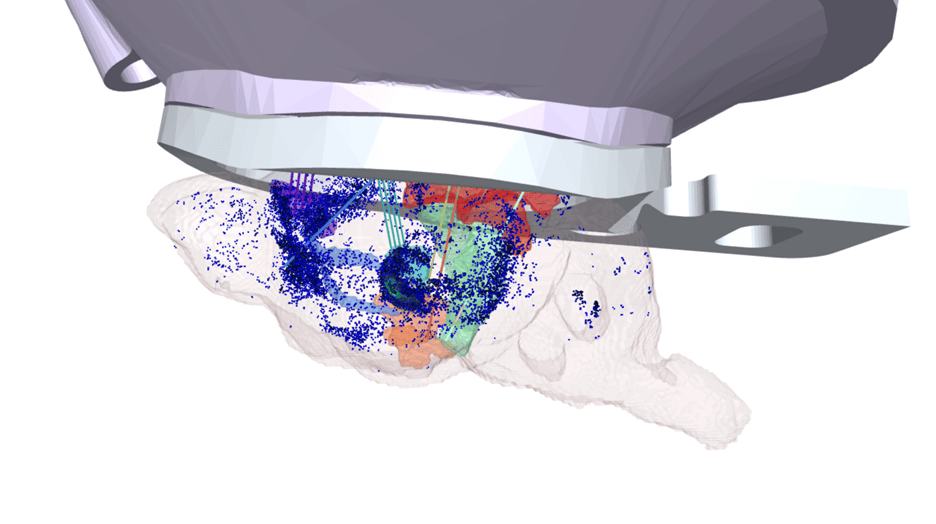
The Single Cell Computation project aims to understand computational operations performed by individual neurons of different types.
Behaviors can be thought of as algorithms, breaking them down into a series of simple steps that each take in an input and produce an output. Many of these steps are implemented by neurons and their circuits. We hope to better understand how behavior are mechanistically implemented by computational operations performed by neurons. For decades, neuroscience has emphasized the neural code, the information encoded in the firing output of a given set of neurons. However, understanding a behavioral algorithm requires understanding both the input and the output of neurons that implement the constituent steps.
For example, a specific neuron might fire when you see the face of a loved one, or when you smile. However, the neural code alone tells us little about how the brain implements these abilities. To understand that, we need to follow how information travels through neural circuits and how the constituent neurons transform their inputs into outputs.
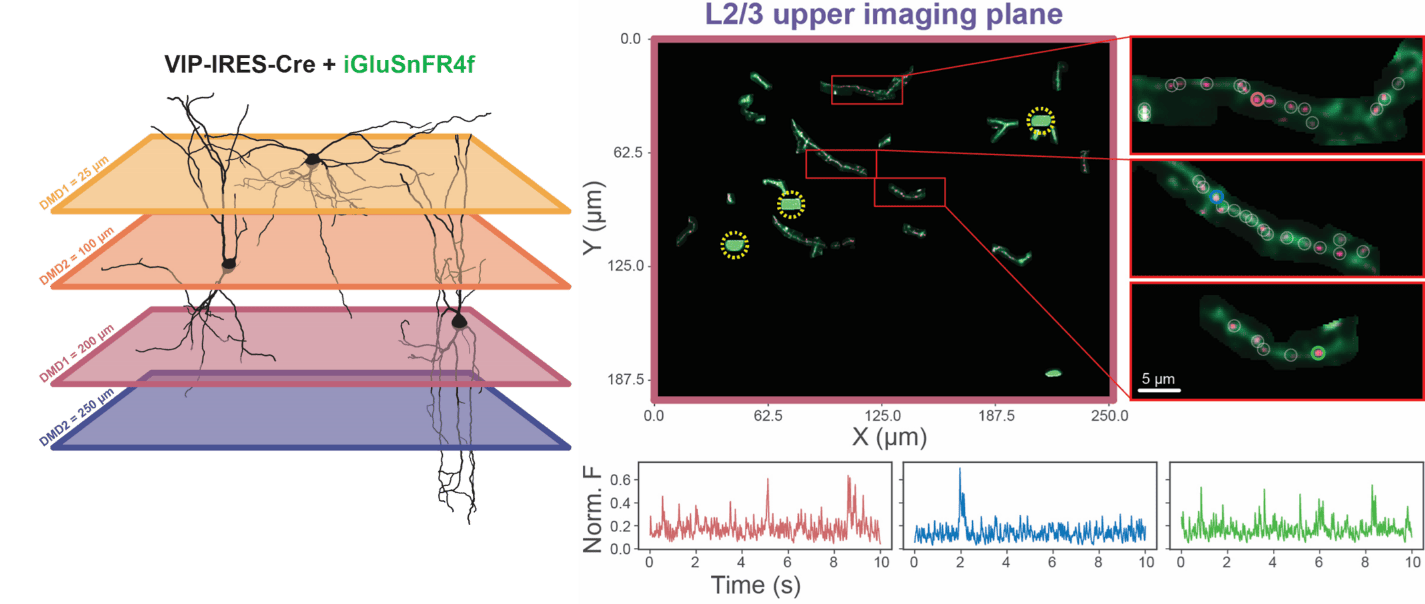
Single Cell Computation investigates neural computations by measuring patterns of input arriving at thousands of synapses onto an individual neuron, while simultaneously measuring its firing output. Analogous to the input–output transformations that make up computer algorithms, we aim to describe brain computations as transformations performed by neurons. Identifying these transformations is a harder technical challenge than measuring information encoded in neuronal outputs, and we have developed a technology platform (SLAP2) that enables the kinds of measurements required.
Predictive processing and the canonical cortical disinhibitory circuit
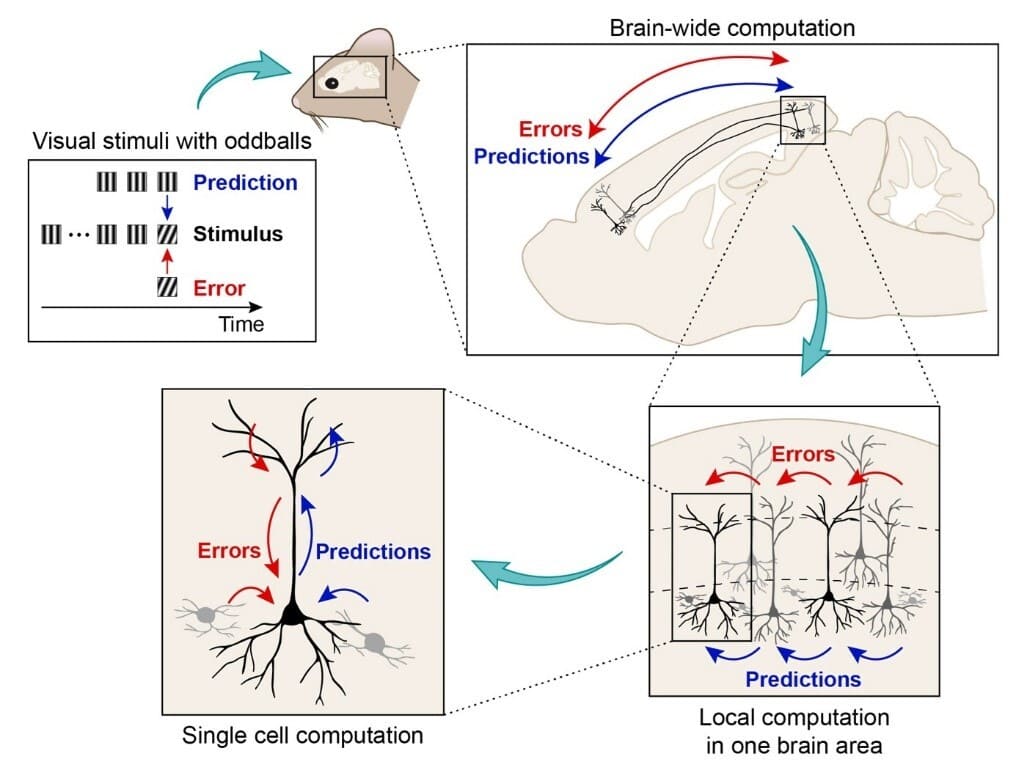
The canonical disinhibitory cortical microcircuit—excitatory pyramidal neurons together with inhibitory VIP and Sst neurons—is implicated in processing novelty, prediction errors, and mismatches between stimuli and their context. These functions are related to detecting surprising situations, which is critical for adaptive behavior. Models of these functions rely on specific patterns of excitatory input to VIP versus pyramidal neurons and/or plasticity of excitatory inputs onto VIP neurons, and they propose VIP neurons as a potential site where a mismatch signal is computed de novo. However, testing these models requires measuring synaptic inputs and outputs in identified cell types, which has not yet been done.
Inspired by these models, we are measuring input-output patterns from different neuron types in this circuit in behavioral contexts that elicit surprise or mismatch responses. Our goal is to identify the algorithmic transformations that these neurons perform and how they may contribute to the computation of a novelty signal in the cortex.
Feature Selectivity in the Cortex
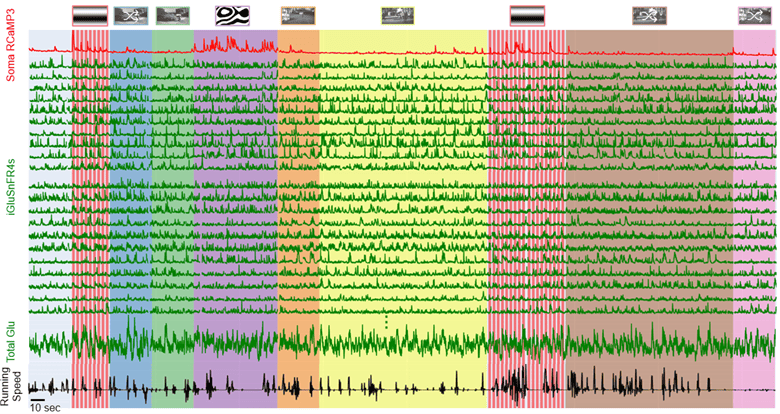
A long history of studies has described responses at different stages of visual processing, from photoreceptors, through the retina, to a variety of interacting brain regions that select for increasingly specific and complex visual features. The visual system has therefore been a dominant model for the computation of complex features from simpler ones by brain circuits. Despite this, while responses to visual features have been characterized in multiple regions, only a few hard-won studies have constrained how any given neuron generates those features from its inputs. The ability to directly observe inputs and outputs to individual neurons provides a new paradigm for investigating these transformations. We are measuring feature selectivity of inputs and outputs of different neuron types in the visual cortex, to test established models of these transformations, develop general methods for inferring transformations from input-output measurements, and discover new computational transformations occurring in different cell types.
Constraining input-output transformations with high-bandwidth measurements
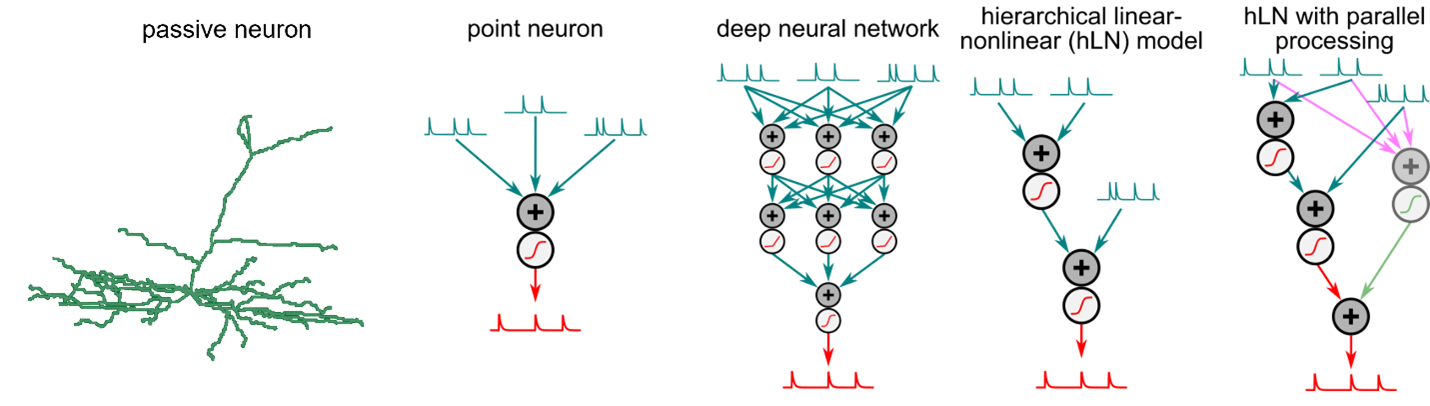
Extensive theoretical work has described how biophysical mechanisms present in neurons can implement complex functions. Although many models have been proposed, they have not been strongly constrained by measurements due to a lack of data. Different models have different potential advantages and disadvantages in interpretability, identifiability, and the complexity of phenomena that they can capture. Using our rich input-output measurements, we are fitting different models to learn how complex those models should be, how to compare models of different neurons, and what is common to neurons of a given type.
Additional funding from:
- NIH DP2NS136990
- BRAIN Initiative UM1MH136462
- NIH SBIR R44MH129023
- CZI CP2-1-0000000704
- Howard Hughes Medical Institute
OpenScope Steering Committee
The OpenScope Steering Committee convenes at least biannually to provide crucial direction for the OpenScope project, playing an essential role in ensuring that we effectively serve our broader community.













%20(1).jpg)
.png)