Open Tool

OpenScope Psycode

Description

Psycode dataset is an OpenScope project designed to investigate the effects of psilocybin on visual processing and behavior in the mouse visual cortex. The core experimental design follows a ‘pre-drug / post-drug’ structure, allowing for a within-subject comparison of neural activity and task performance. Initially, mice are trained on a visual change detection task, similar to the paradigm used in the Visual Behavior Optical Physiology and Visual Behavior Neuropixels projects. In this go/no-go task, mice are shown a continuous series of briefly presented natural images (presented for 250 ms), and they earn water rewards by correctly reporting when the identity of the image changes. Alongside this behavior, the experiment includes a battery of passive visual stimulation protocols to probe the functional properties of visual neurons. The experimental timeline follows a structured sequence. Before psilocybin application, mice first undergo passive visual stimulation for receptive field (RF) mapping and a surround suppression paradigm, providing a baseline measurement of each neuron’s tuning properties. This is followed by the change detection task to end the pre-injection epoch. After psilocybin is administered, the same sequence of stimuli is presented in reverse: first the change detection task, followed by receptive field mapping and surround suppression. Finally, passive visual stimulation is repeated, now including an optotagging protocol at the end to identify cortical SST neurons. This symmetrical design—with both behavioral and passive protocols repeated before and after drug administration—enables a powerful within-subject analysis of how psilocybin modulates visual processing, from basic receptive field properties to complex task-dependent dynamics involving natural image perception. The dataset therefore offers a unique opportunity to link molecularly-specific cell types, natural image perception, and the state-dependent changes induced by a psychedelic compound.


Projects utilizing this tool

No items found.

Platforms utilizing this tool

No items found.

Platforms accelerate our work

Mesoscale Anatomy

This platform builds on turn-key lightsheet microscopes to image mouse brains at high resolution and throughput. Analysis of the resulting volumetric images, including registration to standard brain coordinates and segmentation and counting of individual neurons, is fully automated.

SLAP2

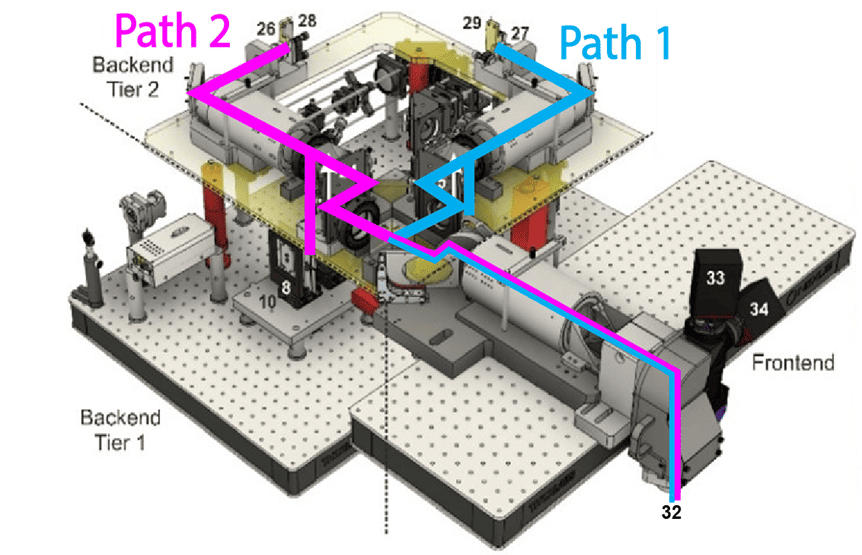
This platform uses a 2-photon microscope SLAP2 that records patterns of synaptic input and output in individual neurons at hundreds to thousands of frames per second in mice performing complex behaviors, using a flexible scan system that combines a digital micromirror device (DMD) with a high-speed scanner.

Scientific Instrumentation & Process Engineering

The Scientific Instrumentation and Process Engineering (SIPE) team is a shared engineering resource within the Allen Institute, focused on enabling and scaling cutting-edge bioscience through integrated hardware and software systems.

Population Calcium Imaging

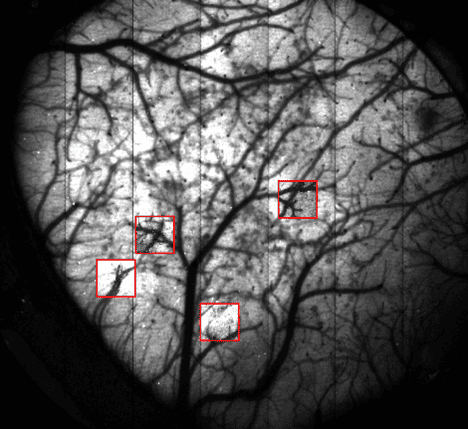
The Population Calcium Imaging platform measures changes in neural dynamics over long time scales as animals learn and behave.

Surgery

This team performs a variety of surgical procedures, including stereotaxic injections and implanting chronic cranial windows and Neuropixels probes.

Multi-Neuropixels Electrophysiology

This platform implements pioneering technology for highly reproducible, targeted, brain-wide, cell-type-specific electrophysiology to record neural activity from defined neuron types across the brain. Analysis and quality control of the electrophysiology data are fully automated.

Brain-Wide Anatomy at Synaptic Resolution

This platform combines innovative histology, ExA-SPIM microscopy, image handling, and machine learning to map the morphology and molecular identity of individual neurons across the whole brain at high throughput.

Fiber Photometry

This platform enables optical measurement of neural activity and neurotransmitter release in populations of neurons to study neural circuit dynamics in behaving animals.

Behavior

The Behavior platform uses advanced technology to implement a standardized, modular, multi-task virtual reality gymnasium for mice, with the goal to study brain function across different behaviors at scale.